A just-released brief from the State Policy Advocacy and Reform Center (SPARC) states that nationwide 11% of children live in a home where at least one parent has a substance abuse disorder. However, two-thirds of children in foster care come from homes with a parent with a substance-abusing problem. Parental substance abuse is the second highest reason for termination of parental rights.
While there are no nationwide data available on the number of substance affected families receiving services through IFPS, there is a wide range of families served. Some child welfare agencies do not refer substance affected families to IFPS while other agencies refer many families. An IFPS program in Tennessee is dealing exclusively with substance affected families in a federally funded project and will have extensive findings of results within a few years.
What is being done to help the most vulnerable families involved in substance abuse?
While there is a widespread belief that treatment slots are not available, the SPARC report indicates a careful analysis reveals that as little as 5% of all treatment slots could serve all parents in the child welfare system who need it.
Five practice innovations are being used in the child welfare system to address substance abuse:
- Screening of Parents: Four states (ME, OK, Fl, NJ) have adopted universal screening methods.
- Screening and Assessment of Children for the Effects of Substance Abuse: Federal law requires screening and assessment for children under age 3 and states are beginning to implement processes.
- Parent Support: Recovery coaches and peer advisers are forms of parental support that are helping parents to successfully complete treatment.
- Evidence-Based Programs: Celebrating Families, Strengthening Families, and PCIT are some of the recommended programs.
- Training the Workforce: Over 55,000 workers have signed up for online training offered by the National Center on Substance Abuse and Child Welfare
(https://www.ncsacw.samhsa.gov/training/default.aspx).
Family Drug Courts
Family Drug Court is an approach to substance abuse deserving special mention. Phil Breitenbucher, Program Director of the Center for Children and Family Futures, says that there are 346 family drug courts serving over 19,000 families nationwide. Judges created drug courts in 1995 to address substance abuse within the child welfare system.
Compared to individual treatment systems alone, family drug courts’ positive outcomes include:
- significantly higher rates of parental participation in substance abuse treatment,
- longer stays in treatment,
- higher rates of family reunification, and
- fewer children in foster care.
A detailed manual for developing family drug courts is available here:
(PDF format, 2.4 Mb) http://bit.ly/1wm7g8m
Substance Abuse and Trauma
Often accompanying substance abuse is trauma. One study showed a high correlation between substance abuse disorders in women and PTSD, most commonly resulting from a history of childhood physical and sexual abuse. Parents may exhibit:
- inconsistent, irritable, explosive, or inflexible discipline;
- low supervision and involvement;
- little nurturance;
- tolerance of youth substance abuse.
In turn, children are much more likely to be traumatized in a home with substance-abusing parents.
How can this cycle be changed?
Seeking Safety is a therapy designed for families experiencing both substance abuse and trauma. Details are available on their website:
http://www.seekingsafety.org/
There are new and exciting resources that can aid families involved in substance abuse. There is hope and help for these families!
_______________
Posted by Priscilla Martens, Director, National Family Preservation Network
For more information on substance abuse and trauma, view this PowerPoint presentation:
(PDF format, 1.2 Mb) http://bit.ly/1uORCRP
To view the SPARC brief, visit:
http://bit.ly/X7BDme
For additional information on drug courts, see The Judges’ Page newsletter, published by the National CASA Association and the National Council of Juvenile and Family Court Judges:
http://bit.ly/1nXKEFT
 I first learned about Family Preservation Services in the early 1980’s while I was at the Child Welfare League of America working on projects focused on Adoption and Permanency Planning. I was elated and skeptical at the same time. I cheered at the immediate (within 24 hours) response to referrals, concern for the child’s safety and the focus on the family as a unit and their relationship to the community and that the services would be given in that home and community. It made so much sense for the worker to be there day and night. And yes, how could they do this if they didn’t have a caseload of two. How great it would be to have an in depth evaluation by skilled staff who had seen first-hand how the family functions. Wouldn’t this satisfy all the courts that wanted more? But I didn’t know how much you could really accomplish with our families in two months. These were the kinds of families we had seen for years of continuous non-service. Could episodic help really help? Did families get referred on?
 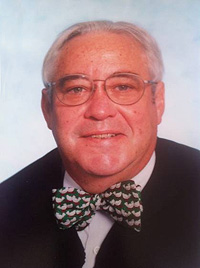 When I penned the scenario for an Edna McConnell Clark funded gathering of Judges, State Agency Executives and members of the Conference of State Legislatures, I tried to capture the whirlwind of change that had come about since the 1980s. I went on the bench in 1975 and was exposed to Judge John Steketee and Peter Forsythe’s work on judicial review of children in placement and the resistance of the judiciary and agency to take on that oversight role which was, at first, poorly defined.